Cap Vermell nature reserve
From Artà, a broad river valley runs down to the beach of Canyamel. The cave entrance opens in its rocky slopes, which stretch all the way to the reddish cliffs of Cap Vermell.

The Cuevas de Artà open into the cliffs of Cap Vermell, 35 metres above the sea. Inside, a 700-metre guided route leads past columns, curtains of stone and halls up to 45 metres high.
Discover one of the most remarkable and iconic places in Mallorca. The Cuevas de Artà are among the finest examples of the forces that shaped the island’s underground landscape. Visited since at least the 16th century, this natural wonder remains one of Mallorca’s great attractions, for its beauty and its sheer scale.
This underground landscape is the result of a long and complex geological story. Every step down is a leap of millions of years.
The cave is carved into limestone, made mostly of calcium carbonate (CaCO₃), laid down on the floor of ancient seas during the Jurassic. The rock holds the remains of shells and skeletons of the creatures that lived there.
As Africa collided with Europe, raising the Alps and the Pyrenees, these marine rocks emerged, folded and fractured. Rainwater seeped into the cracks. You can still see it on the cave ceiling, where stalactites grow in lines that follow the fractures.
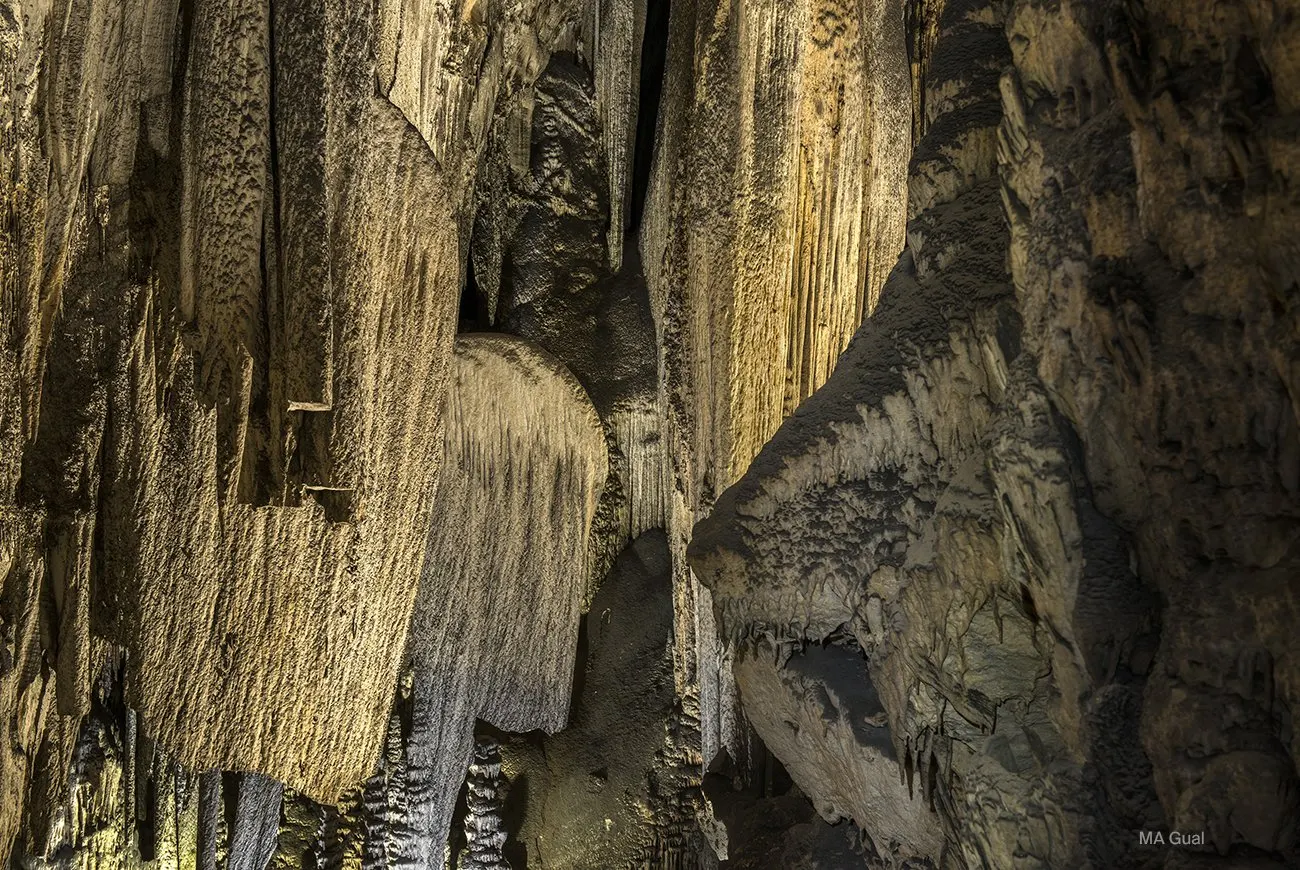
Rainwater, made slightly acidic by carbon dioxide (CO₂), slowly dissolves the limestone. Geologists call this karst formation, after the Karst region of Slovenia, where it was first studied.
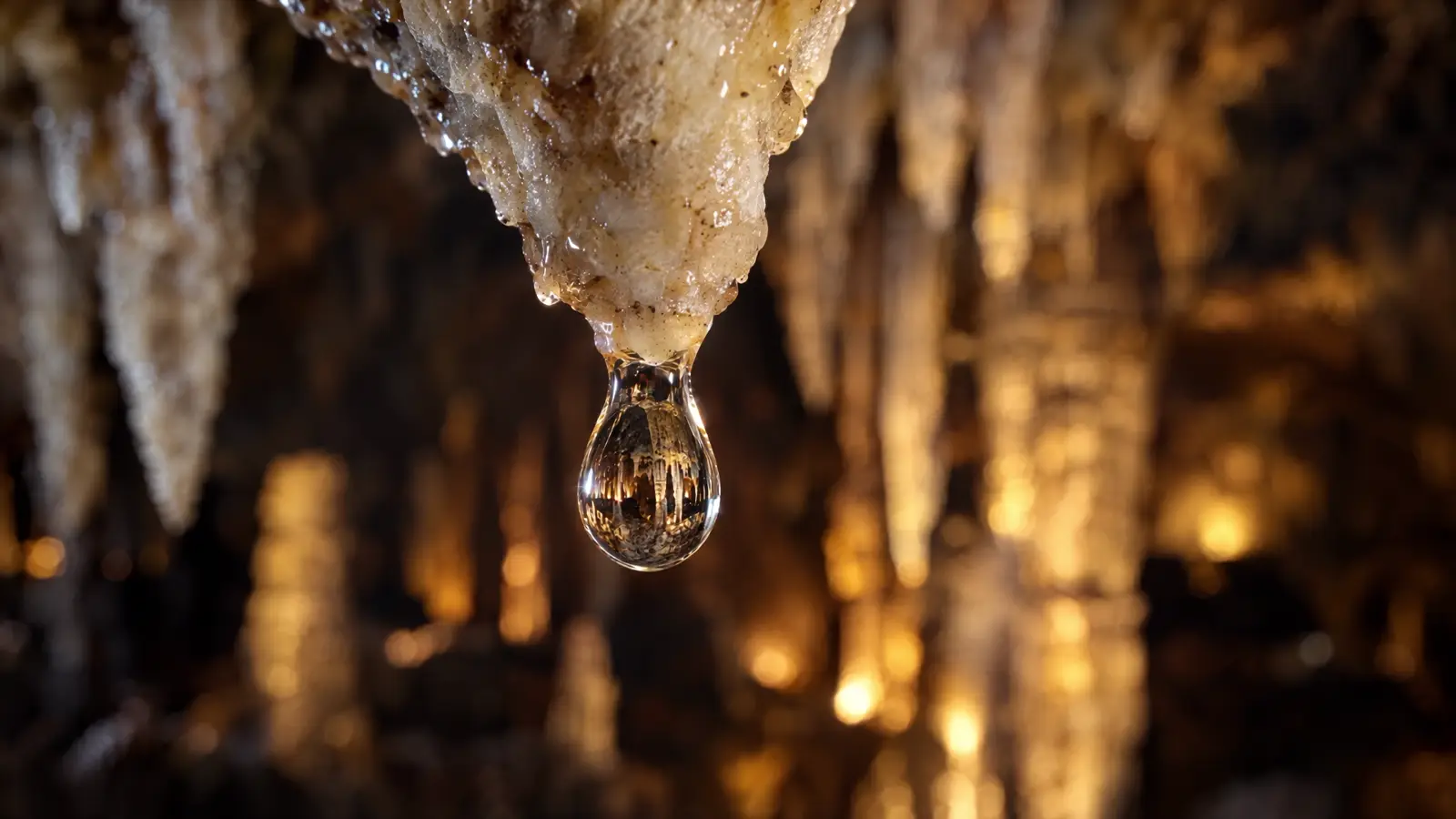
When a drop forms on the ceiling, it leaves behind some of its dissolved lime and slowly builds a stalactite. As it falls, the same drop deposits the rest on the floor, forming a stalagmite. In time, the two meet as a column. They usually grow less than a few millimetres per millennium.
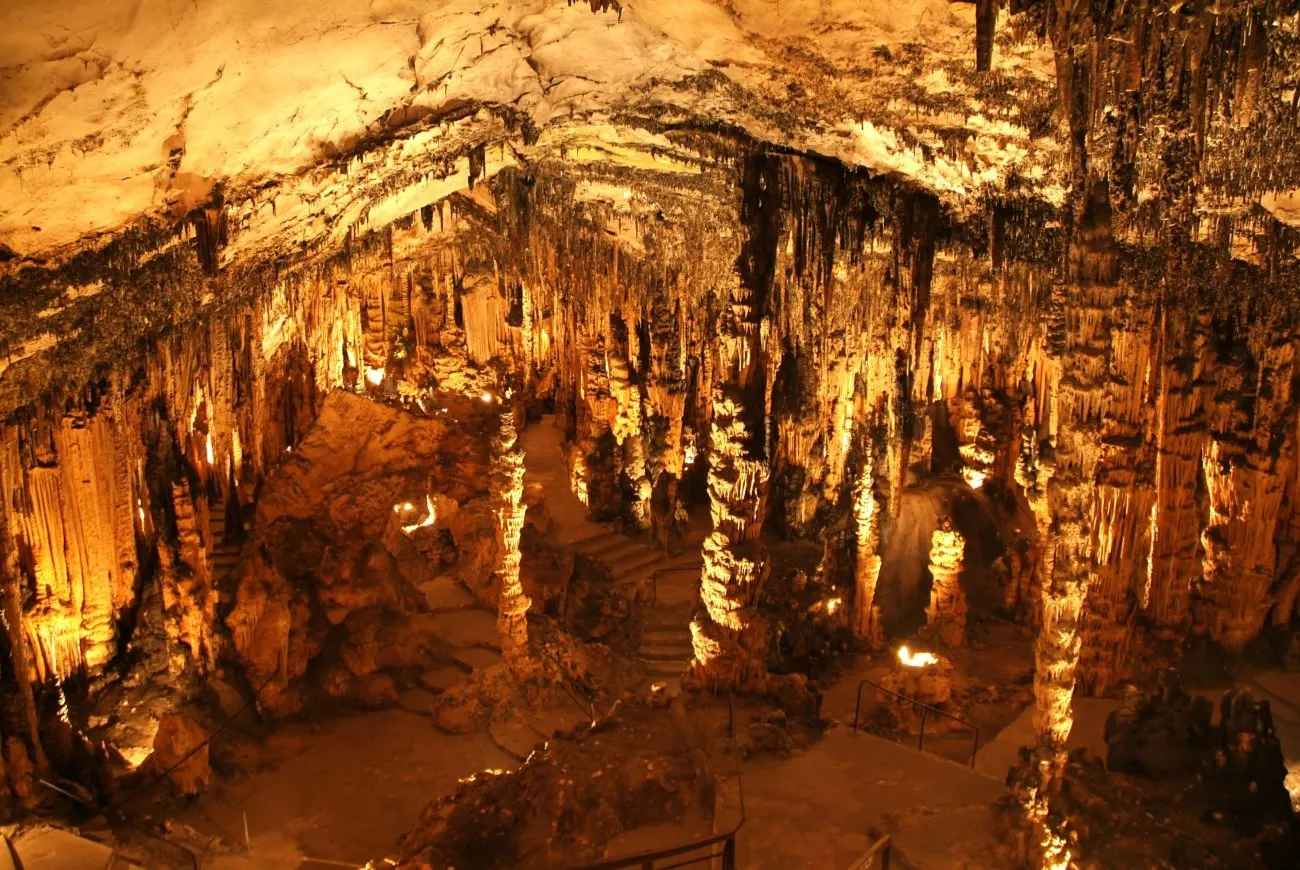
By the early Pliocene the cave had formed and was richly decorated with speleothems: stalactites, stalagmites, columns, flowstones and draperies. Typical of Artà are the discs or shields, tilted circular plates. They are rare elsewhere on the planet, yet here they reach spectacular sizes.
Between 4 and 3 million years ago, rising seas repeatedly flooded the cave and left bulbous overgrowths in halls such as El Purgatorio. In 2019 a study in the journal Nature, by the Universitat de les Illes Balears, the University of New Mexico and Columbia University, used these deposits to show that 3.3 million years ago sea level was sixteen metres higher than today. Temperatures were only two or three degrees above pre-industrial levels.
Read the article ↗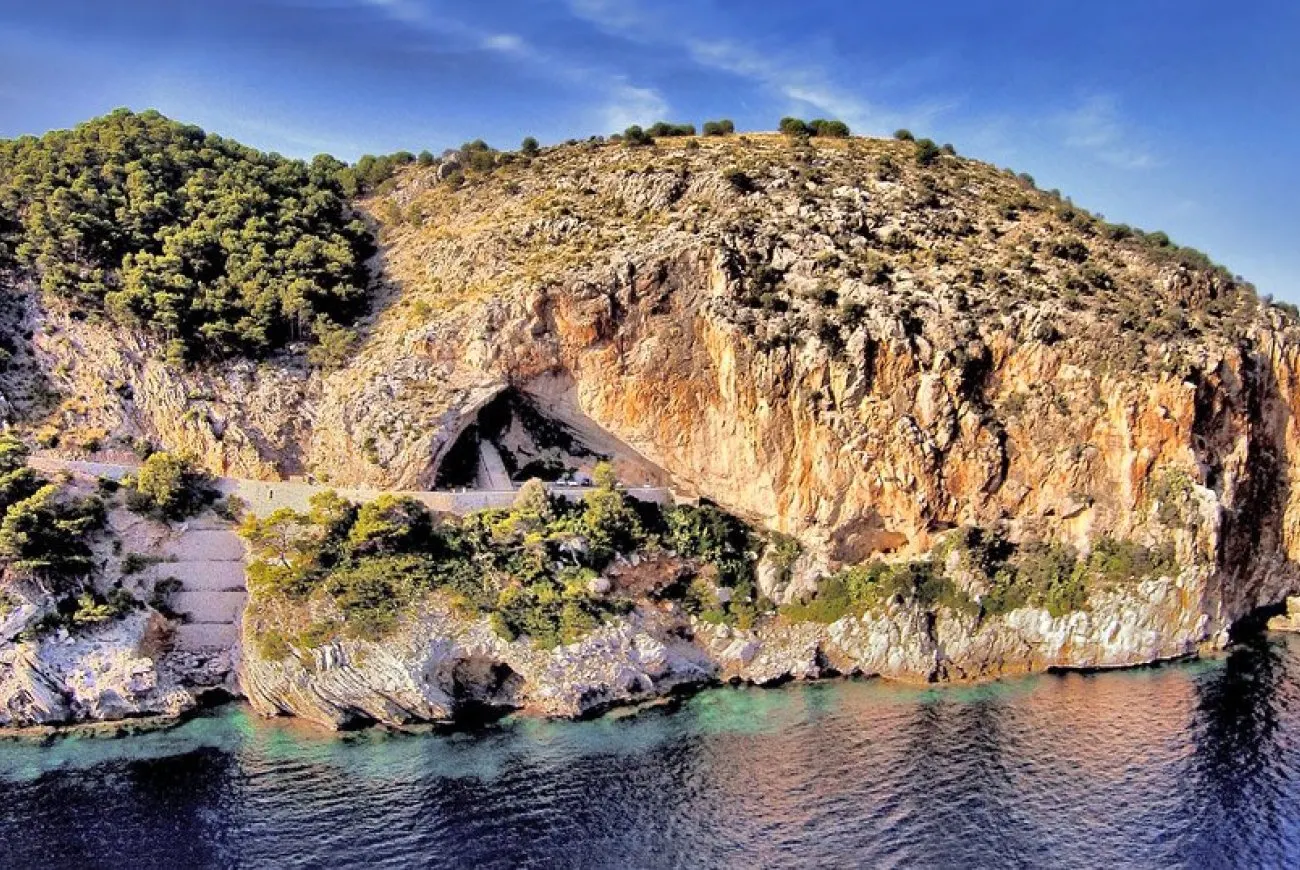
During the Pleistocene the cave took on its present form, and the spectacular entrance opened in the cliffs of Cap Vermell.
With thanks to researchers Joaquín Ginés and Joan J. Fornós (Department of Earth Sciences, UIB, and Sociedad Espeleológica Balear) and to nature photographer Miguel Ángel Gual.
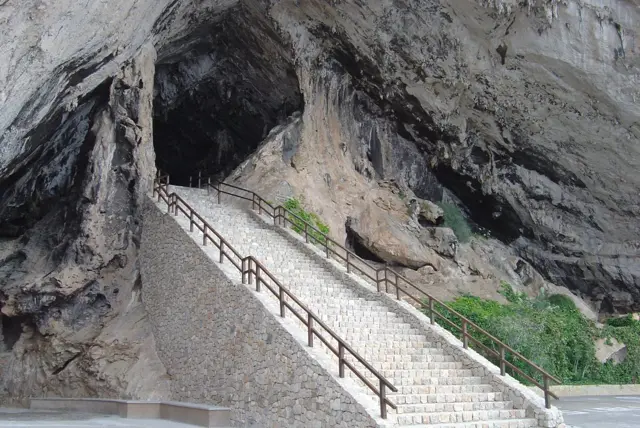
A grand stairway leads up to the cave’s natural mouth, overlooking the bay of Canyamel. You enter through a tunnel and follow a level path of more than 700 metres. Tours are guided, last 35 to 40 minutes and leave roughly every half hour, in Spanish, English, French and German. Inside, the temperature ranges from 17 to 22 °C, with high humidity.
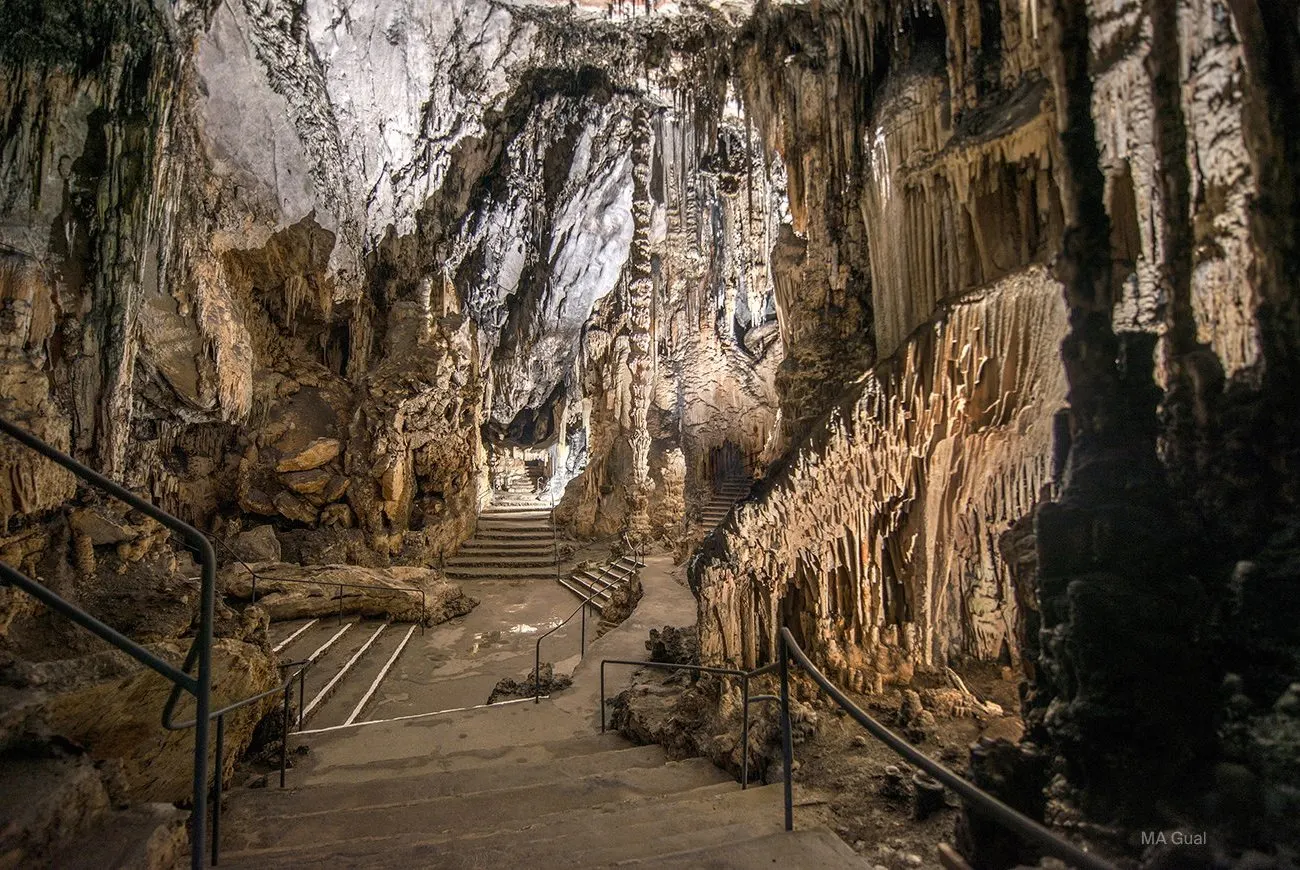
An imposing chamber filled with stalagmites and columns that look like human figures, motionless ghosts. From the high vault hang stalactites aligned with the cracks in the rock.
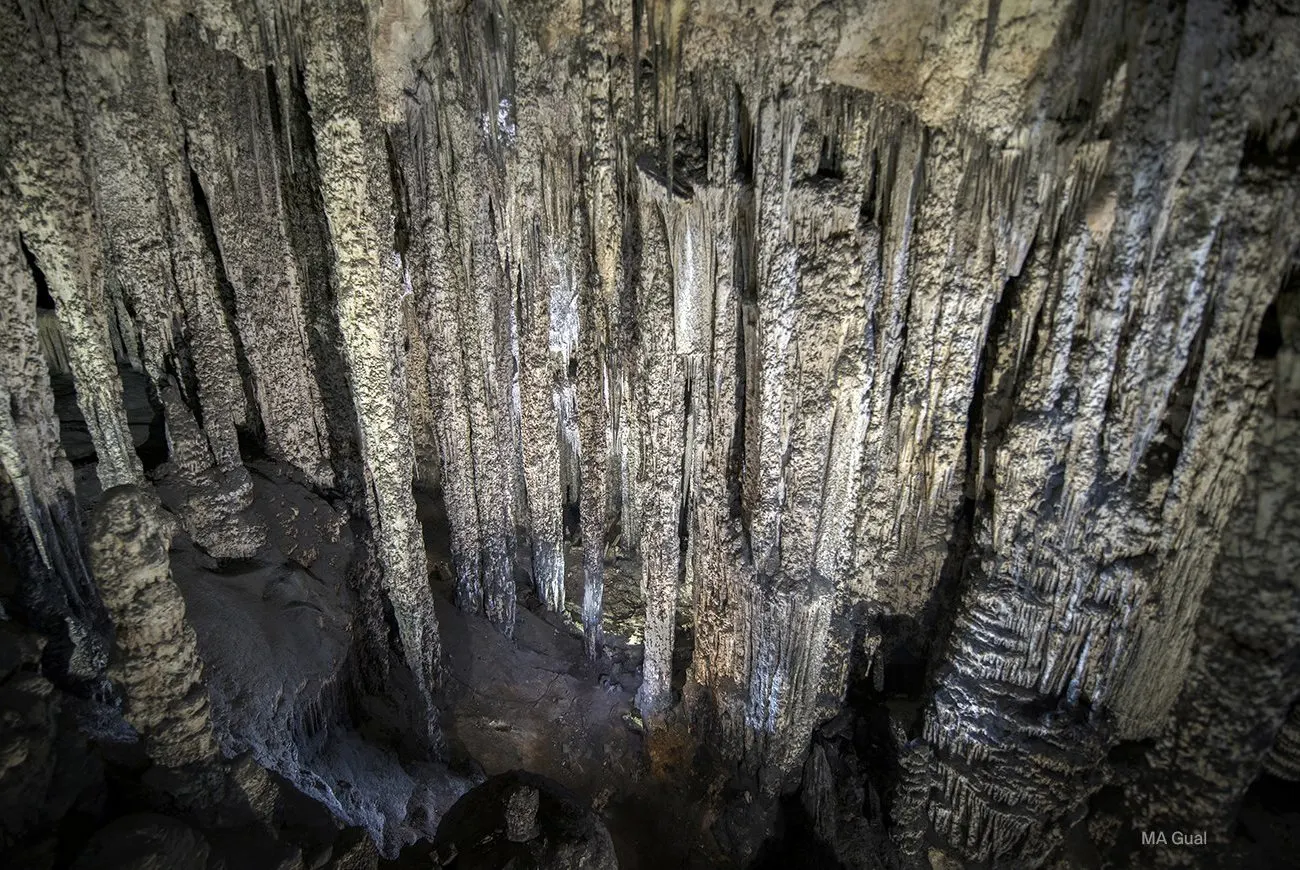
An almost Gothic interior, studded with slender columns, pointed arches and filigree canopies. As you pass through, the light shifts in the most surprising ways.
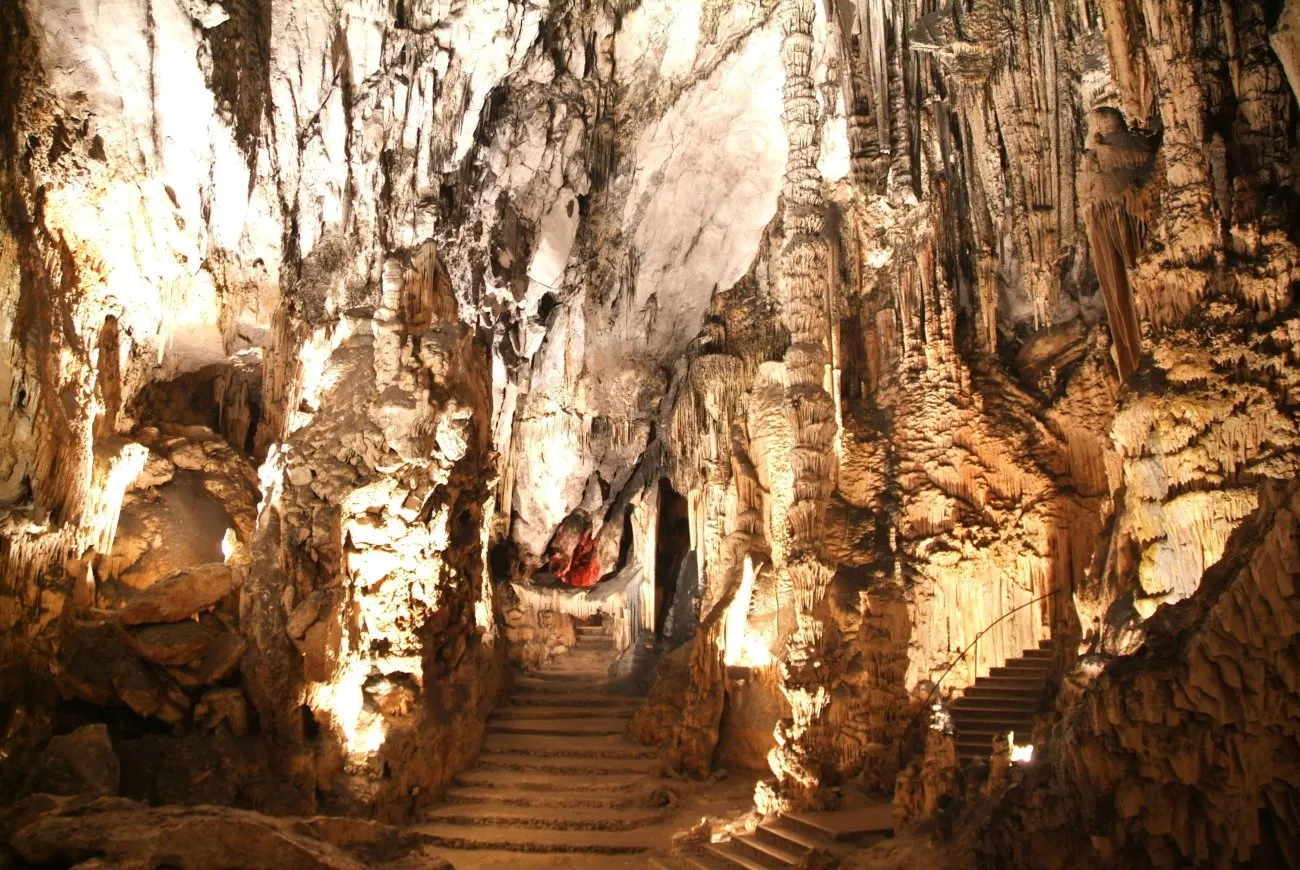 17 m
At the heart of a vast oval hall rises a slender stalagmite of about 17 metres, tapering in festoons up to the ceiling. Nearby are a tilted disc some 4 metres across and broad stone curtains, the canopy, framing the way into Hell.
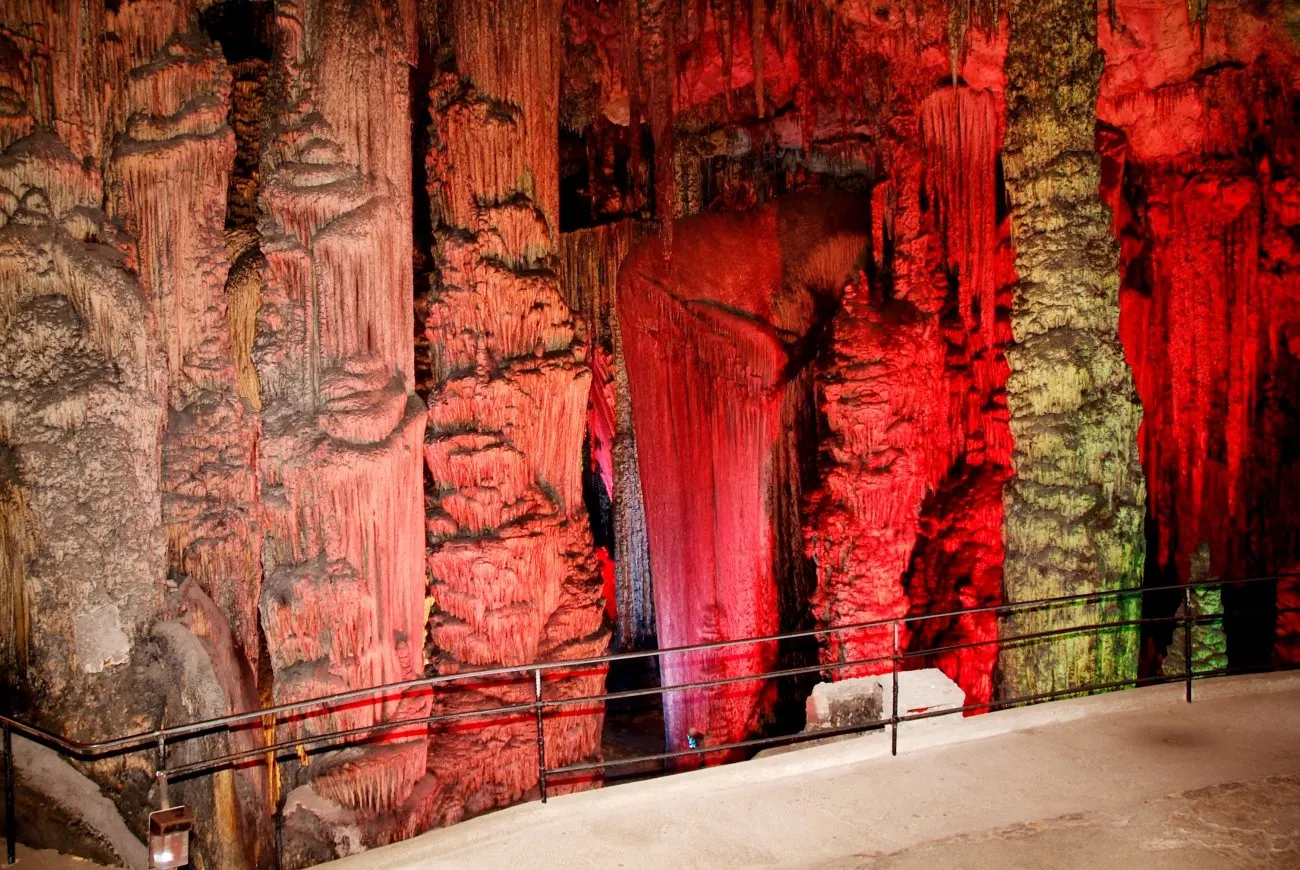 −10 m
From a balcony you look out over one of the largest halls in the cave, brought to life by a light and sound show. Its name recalls the descent of more than 10 metres that visitors once made on rope ladders, by the light of oil lamps and torches.
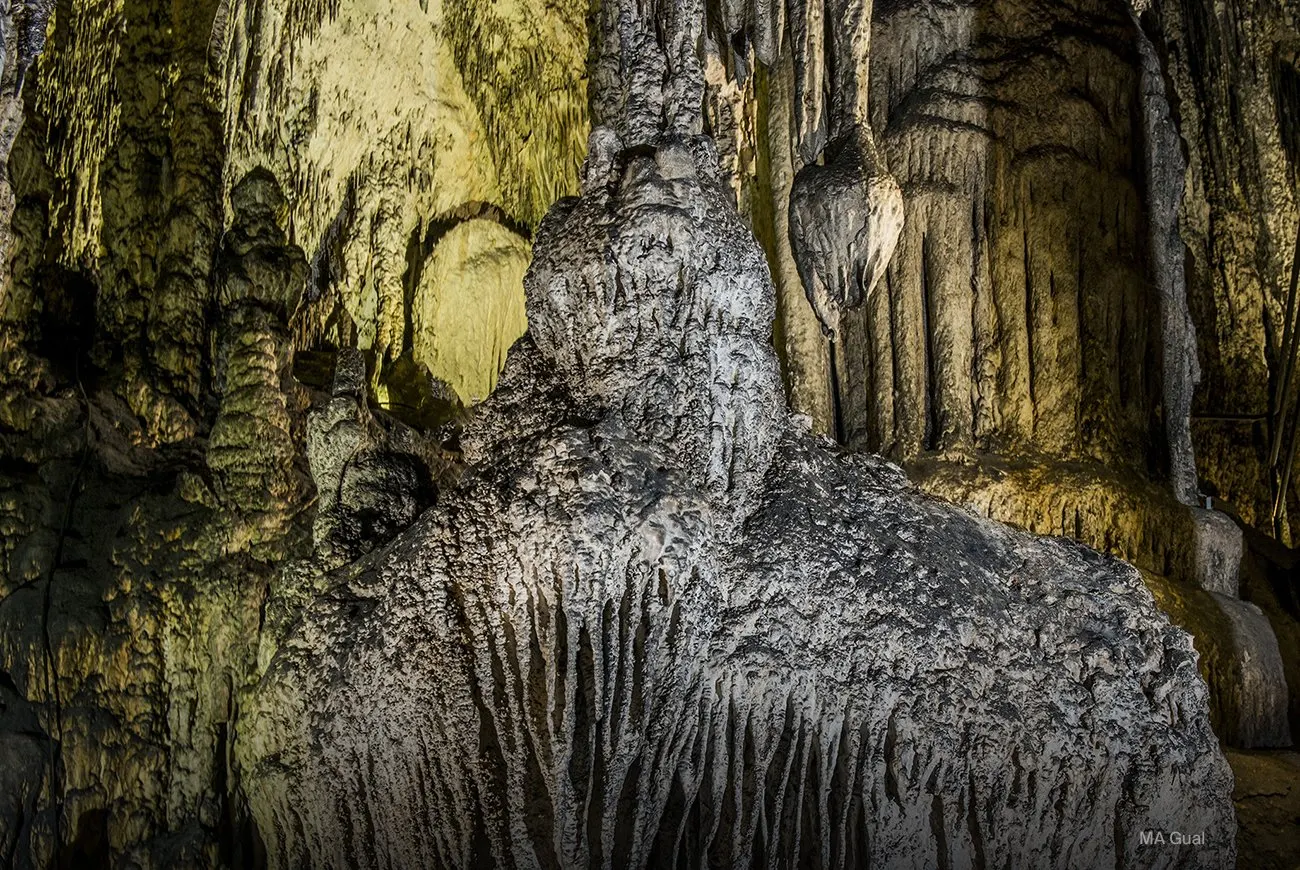
You cross it on a raised bridge. Its highlight is the Baptistery, a stalagmite swollen at the top by ancient flood levels.
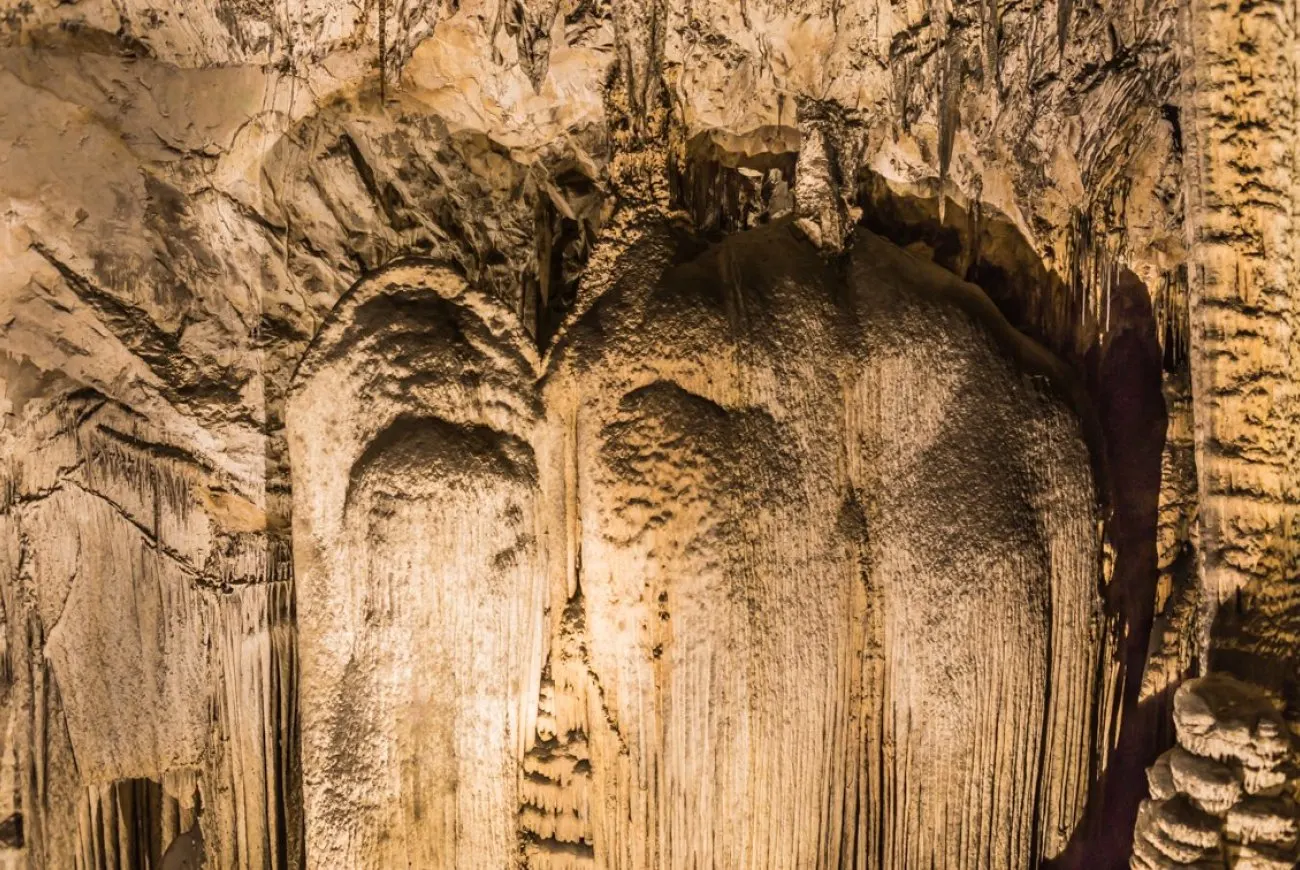
Draperies hang from the ceiling like stage curtains and wings. Near-vertical discs and bulbous forms tell how the groundwater settled again and again.
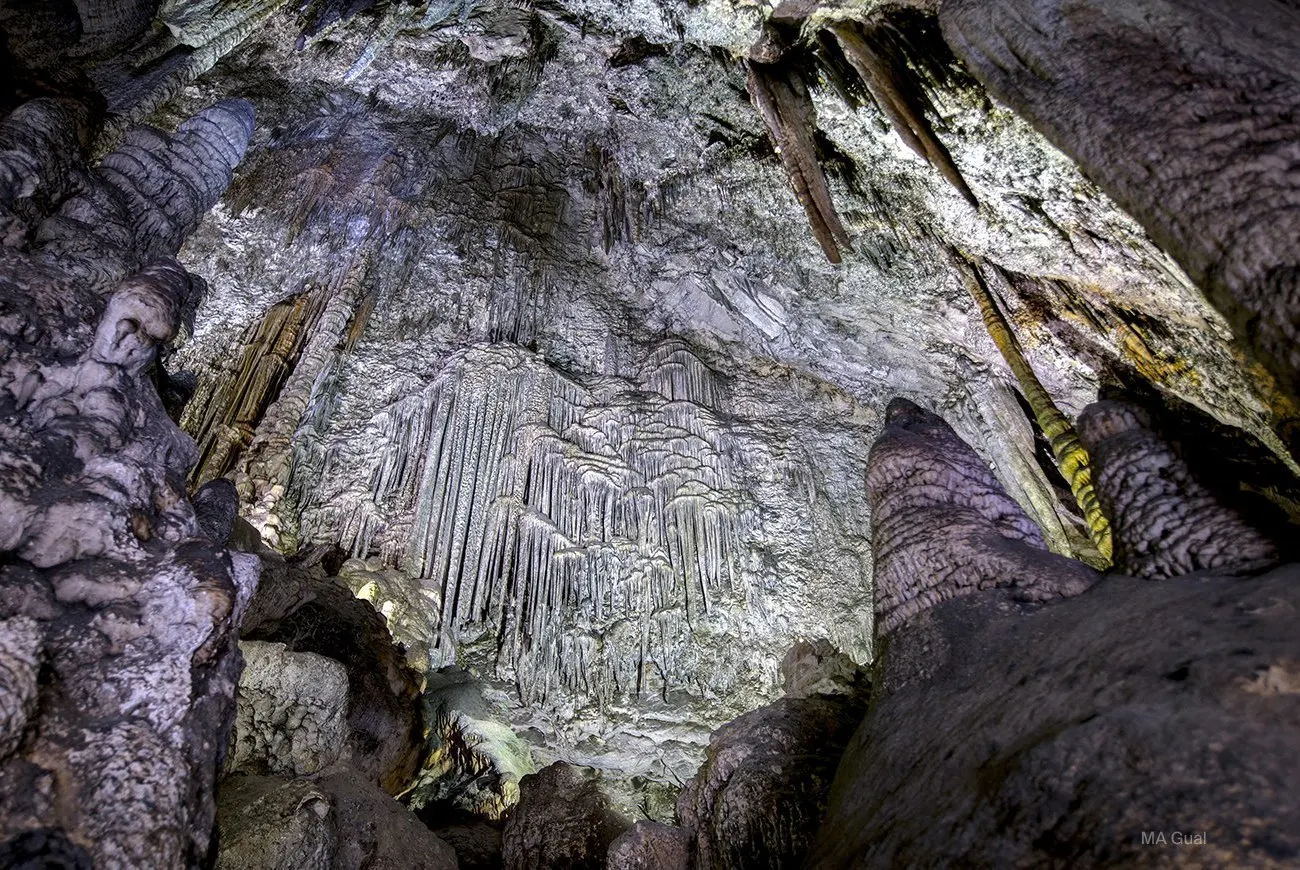
Limestone discs draped in stone hang from walls and ceiling like flags. At the far end, a cluster of giant columns forms a colossal organ that seems to vanish into the clouds.
45 mA climb brings you to a viewpoint in the highest part of the cave, where the ceiling soars some 45 metres above the floor of Hell. From here you can make out a formation that resembles a giant elephant or mammoth.
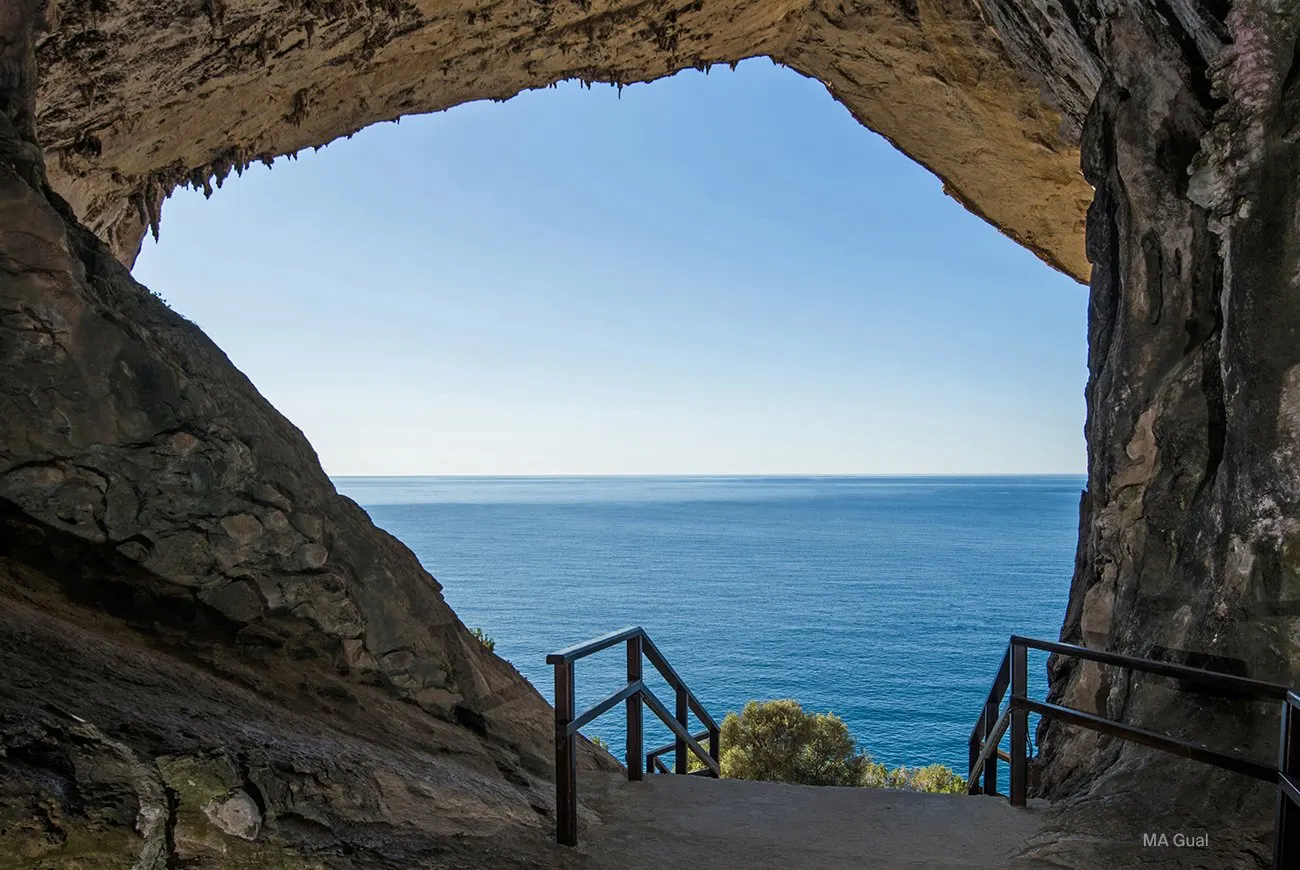
The way out passes the Queen of the Columns and the diamond stone once more. A grand stairway returns you to the cave mouth, with a spectacular view over the Mediterranean.
With its great open mouth, the cave was already known in prehistoric times. The earliest recorded visits date back to the 16th century.
Some legends say the Muslim population sheltered here after the Christian conquest. Others speak of hermits, hence its old name: Cueva de la Ermita, or Coves de s’Ermità.
First written mention, by the Mallorcan historian and geographer Joan Binimelis in his Historia General del Regne de Mallorca.
First detailed descriptions: Isidoro de Antillón (1815), Joaquín M. Bover (1836) and Antonio Cabrer (1840), who explored the cave several times.
The grand entrance stairway is built for Queen Isabella II’s visit to Mallorca, though in the end she never came to the cave.
Pere d’Alcántara Peña draws the first detailed map, published in 1885 in the Álbum de las Cuevas de Artá y Manacor by Sebastián Gay and Baltasar Champsaur.
The cave gains European renown with visits from scientists H. A. Pagenstecher and R. W. Bunsen (1865), Archduke Ludwig Salvator of Austria (1884) and explorers Gaston Vuillier (1888) and Édouard-Alfred Martel (1896).
Miquel Costa i Llobera sets the legend of the priestess Nuredduna in the cave, in «La deixa del geni grec».
Visit of King Alfonso XIII.
The Cuevas de Artà join Mallorca’s tourism offer and help shape the island’s nature-based attractions.
The journal Nature publishes the study on sea level 3.3 million years ago, based on deposits from the cave.
«Per un batec de l’ansia amb què ton cor expira daríem les centúries de calma que tenim.»
For one beat of the longing with which your heart expires, we would give the centuries of calm we hold.
All year round, except schools. Proof of residence with ID card or equivalent document.
Children aged 7 to 12 must show proof of age with an ID card or equivalent document.
Closed on 25 December and 1 January. Guided tours of 35 to 40 minutes, roughly every half hour, in Spanish, English, French and German.
It is around 18 °C and very humid inside. Wear comfortable shoes: the route includes stairs.
The caves lie on Mallorca’s east coast, in the municipality of Capdepera, above the bay of Canyamel. The entrance opens 35 metres above sea level in the reddish cliffs of Cap Vermell.
Free parking and EV charging points next to the entrance.
GPS coordinates: 39.656134, 3.451108
Open in Google Maps ↗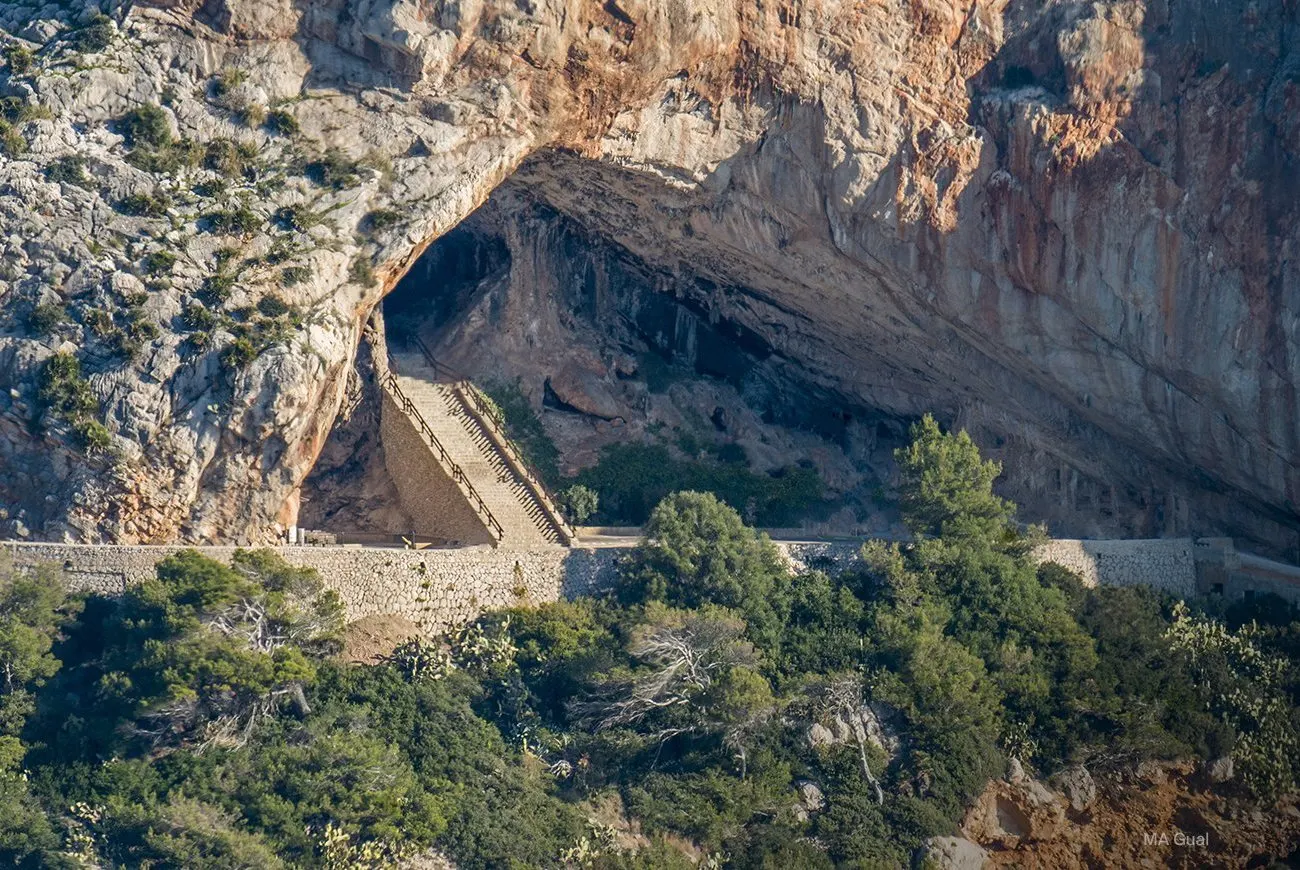
From Artà, a broad river valley runs down to the beach of Canyamel. The cave entrance opens in its rocky slopes, which stretch all the way to the reddish cliffs of Cap Vermell.
Cala Ratjada, Cala Mesquida, Font de sa Cala and Canyamel. The Sa Mesquida valley, with the Munt Gros dunes, and the Canyamel valley are protected Natural Areas of Special Interest.
The Talaiotic settlements of Ses Païsses, Son Satre, Son Cabila, Son Favar and the Claper des Gegant. And the fortified town of Capdepera, with its castle from around 1300, built by order of King James II, from which you can see Menorca.
Limestone hills, unspoilt beaches and pine forests: much of the eastern coast is protected for its natural value.
Photos: Miguel Ángel Gual and Cuevas de Artà.
Any questions? Write or call us. We will be happy to help.